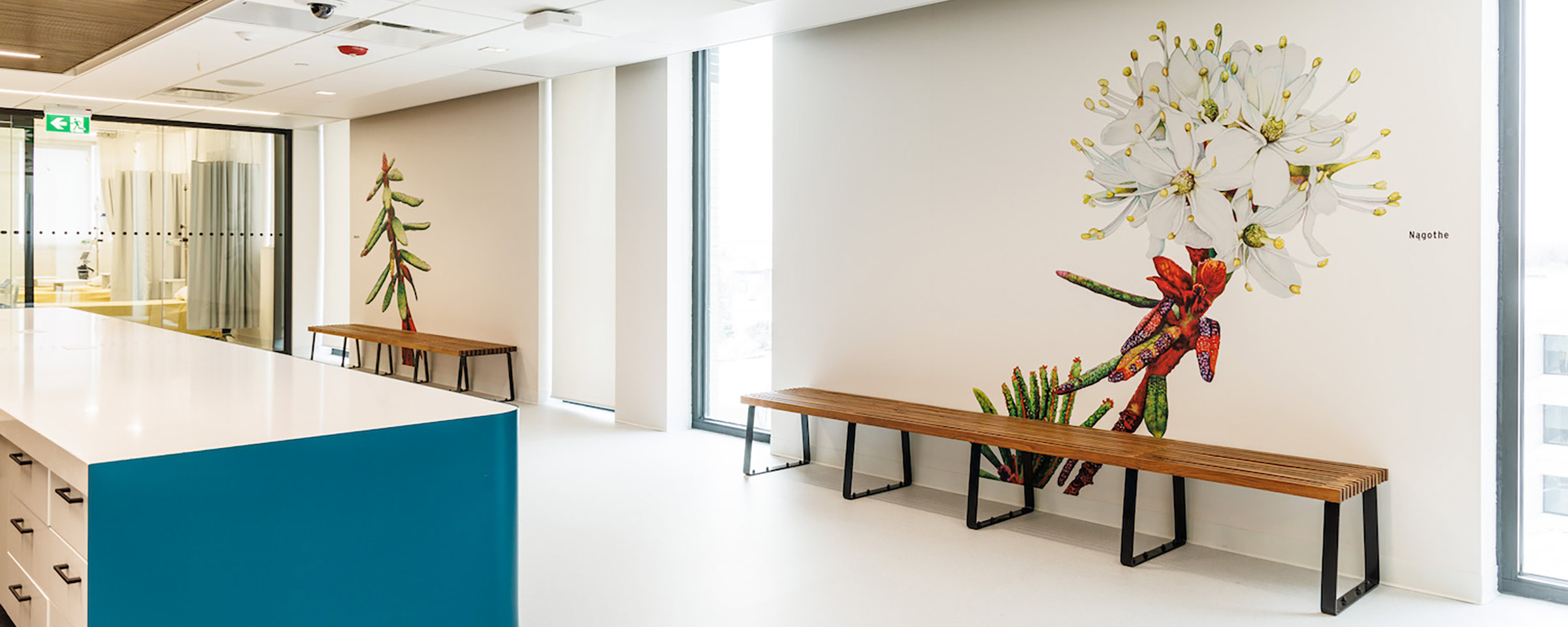
At RRC Polytech’s Simulation Centre, advanced medical technology meets deep cultural tradition. Alongside the Centre’s modern equipment, large-scale drawings of traditional Indigenous Medicines bring colour, meaning, and connection to the learning environment.
Created by local Métis interdisciplinary artist Christine Kirouac, the drawings depict plants such as sweetgrass, cedar, sage, saxifrage, red willow, and Labrador tea. Each illustration is carefully integrated into the space, designed to complement the architecture and serve as a reminder that today’s medical practices are rooted in knowledge systems that have existed for generations.
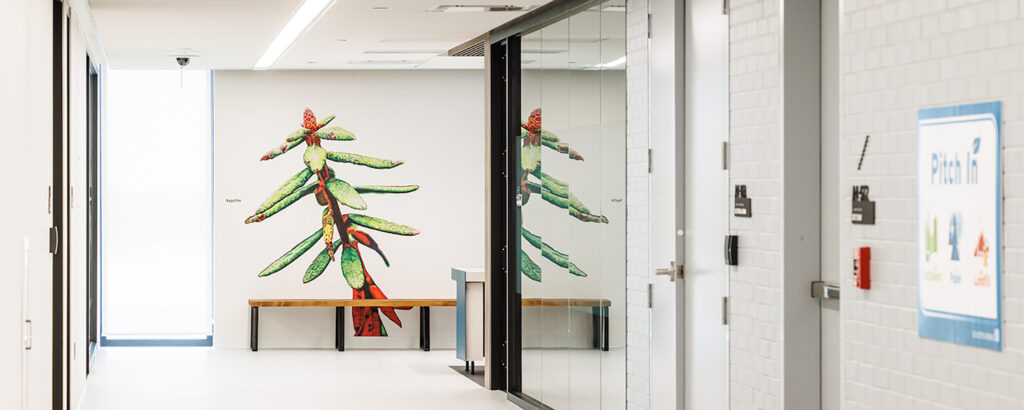
The Simulation Centre was envisioned as more than a state-of-the-art training environment. It also serves as a place of balance — where traditional Indigenous Medicines and Western health practices are presented as complementary, not opposing. The plant drawings highlight this relationship, creating an atmosphere that is both clinical and deeply human.
Placed throughout the Centre, the illustrations appear to grow into corners and hallways, softening the sterile environment while sparking curiosity and reflection. Whether students are practicing clinical skills or pausing in a quiet space, the presence of these Medicines connects them to a broader understanding of healing.
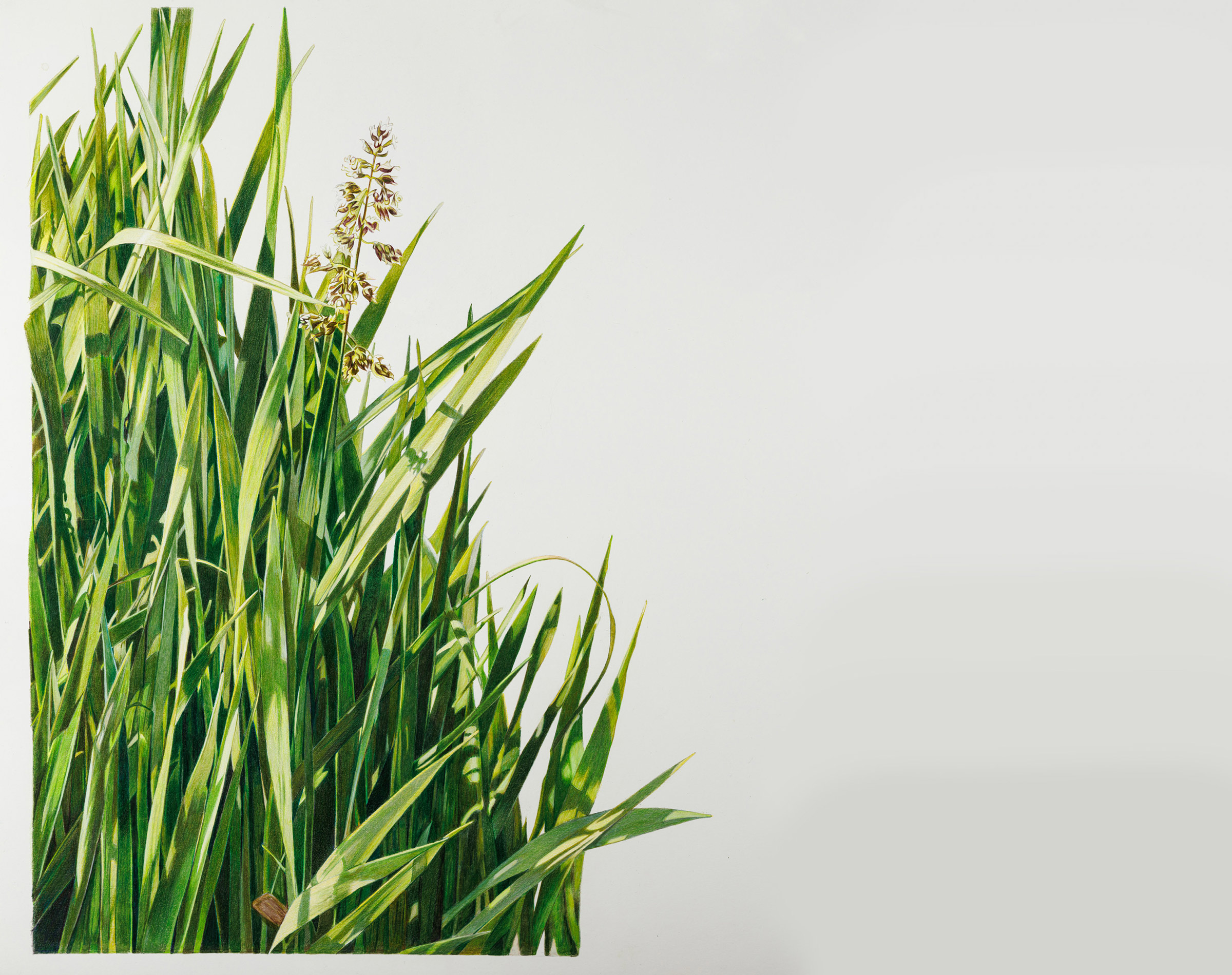
Each piece was created with care, using detailed graphite drawings to capture the living qualities of the plants. Subtle differences in light and shadow reveal the complexity of each Medicine and evoke specific places, times, and seasons. The works are not simply decorative — they act as bridges between knowledge systems, encouraging students, staff, and visitors to slow down, look closer, and recognize the significance of these Medicines.


Photos taken by Leif Norman
The selected plants and their traditional names include:
| English Names | Traditional Names | Language |
|---|---|---|
| Sweetgrass | Wiingwashk (Ween-gash-k) | Anishinaabemowin (Ojibwe) |
| White Cedar | Maskawáhtik(wak) (Mask-ah-wah-dtig) (wug) Note: (wak) is plural. | Ininimowin (Cree) |
| Prairie Sage | Pezhikhota (Pezh-ee-GHOH-tah) | Dakota Oyate |
| Saxifrage | Aupilaktunnguat (Ow-pe-LUK-toon-nuat) | Inuktitut |
| Red Willow | Ahsehsap(an) (Ah-seh-sup) (un) Note: (an) is plural. | Anishininimowin |
| Labrador Tea | Nągothe | Denésuline |
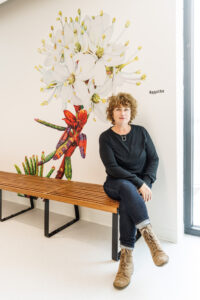
Christine Kirouac is a Winnipeg-born, Métis interdisciplinary artist known for her detailed graphite drawings. Her work explores connections between people, place, and nature. For the Simulation Centre, she engaged in dialogue with Knowledge Keepers, Elders, and gardeners to ensure that each plant was represented with cultural respect and accuracy.
Christine describes her role as a “shapeshifter” — an artist who lets each project guide her choice of tools and approach. Through her drawings of Indigenous Medicines, she offers learners and visitors a visual experience that is both grounding and transformative.
The plant drawings are permanently installed in the Simulation Centre and create a unique atmosphere for those training in the space.
Visitors can also view the original 32” x 40” works on display in the Notre Dame Campus Library.
By weaving Indigenous Medicines into the Simulation Centre, RRC Polytech highlights the importance of honouring traditional knowledge while preparing the next generation of health and community services professionals.
RRC Polytech campuses are located on the lands of the Anishinaabeg, Ininiwak, Anishininwak, Dakota Oyate, and Denésuline, and the National Homeland of the Red River Métis.
We recognize and honour Treaty 3 Territory Shoal Lake 40 First Nation, the source of Winnipeg’s clean drinking water. In addition, we acknowledge Treaty Territories which provide us with access to electricity we use in both our personal and professional lives.