Woman walking in front of RRC Polytech's Notre Dame Campus

News

Truth and Reconciliation

RRC Polytech launches year-round free application initiative for Indigenous learners
February 17, 2026

Potential learners who self-declare as First Nations (Status and Non-Status), Métis or Inuit are now eligible for free application to any RRC Polytech program.

“We know improving access for Indigenous learners and for students from different backgrounds requires multiple forms of support,” says Dr. Christine Watson, Vice-President Academic.

“Waiving the application fee and working directly with Indigenous students and the communities that support them allows us to remove a financial barrier that is faced when individuals begin to think about joining RRC Polytech as a student. This is one step in alleviating additional barriers they may face in their journey from applying to attending.”

The initiative reduces a financial barrier for Indigenous learners and follows two month-long pilot campaigns in 2024 and 2025 that drew more than 400 and 700 applications, respectively.

These results demonstrated the demand for more accessible application pathways, contributing to the decision to make the initiative permanent. Laureen Janzen, Director of Student Support Services, said many Indigenous applicants shared that the initiative helped them feel welcome at RRC Polytech.

“One person said they felt like they won the lottery,” says Janzen. “By making this a year-round initiative, Indigenous applicants can now also take their time to consider program fit, meet with some of our support services on campus and really understand the programs and the admission requirements.”

RRC Polytech recognizes that financial barriers are only one of several challenges some Indigenous learners may face when considering post-secondary. Potential learners can connect with an Indigenous Academic Advisor to help navigate the transition to post-secondary.

Current students can also access support at RRC Polytech’s Indigenous Student Support Centres, where they can participate in events, cultural teachings and ceremonies, or spend time with friends. Read More →

Commitment in action: Truth and Reconciliation advanced through collective bargaining

January 26, 2026

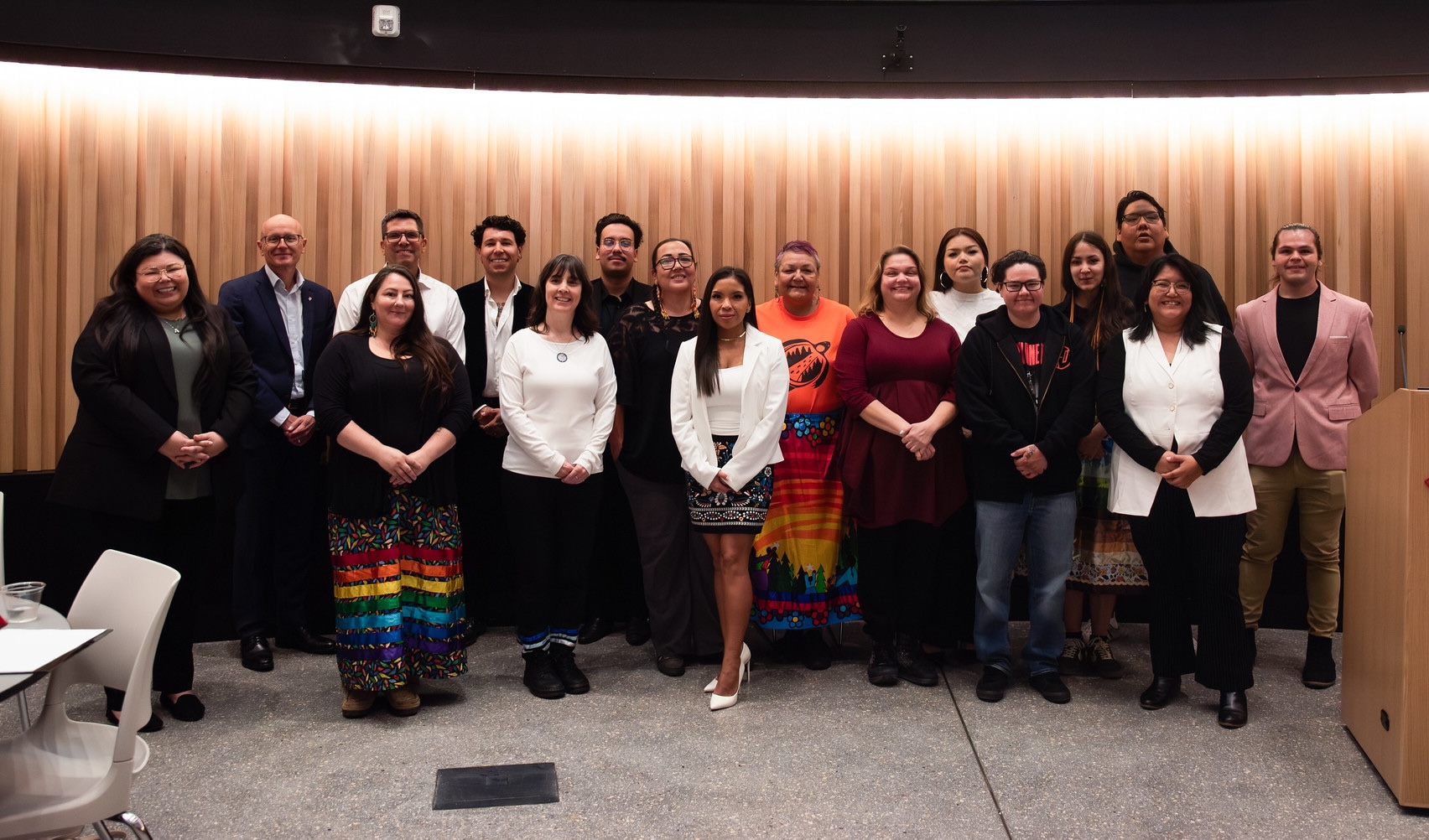
Today, RRC Polytech and the Manitoba Government and General Employees’ Union (MGEU) Local 73 celebrated the signing of an agreement that puts change into action to decolonize and enhance equity and inclusion within the Polytech’s Collective Agreement.

This collaboration — the first of its kind — represents a new and transformative approach to advancing the Truth and Reconciliation Commission of Canada’s Calls to Action within labour relations and the collective bargaining process. What sets it apart is the intentional approach rooted in Indigenous knowledge and ways of being, guided by a Knowledge Keeper and supported by both RRC Polytech and MGEU.

“The signing reflects the collaborative work of RRC Polytech and MGEU to live our shared values, advancing Truth and Reconciliation organizationally and within Manitoba,” says Fred Meier, President and CEO, RRC Polytech.

“This process stands out across Canada, setting a precedent for other post-secondary institutions by aligning with Truth and Reconciliation and Community Engagement (TRCE) and Equity, Diversity, Inclusion and Accessibility (EDIA), honouring Indigenous Knowledge Protocols, and fostering leadership, mentorship and systemic change at the Polytech.”

To review RRC Polytech’s collective agreement, a joint Truth and Reconciliation Working Group was established through an expression of interest, comprised of eight staff and faculty representing both parties.

Guided by Kookum Barbara Bruce’s teachings, ceremony and wisdom, the group ensured the process moved forward in a good way, grounded in Indigenous Knowledge Protocols. Using priority-setting and Design Thinking — a non-linear, iterative process that reflects true Indigenous engagement — the working group developed recommendations under key themes for the collective agreement. Read More →

New Indigenous stoles, visual identity unveiled at Fall Convocation

November 18, 2025

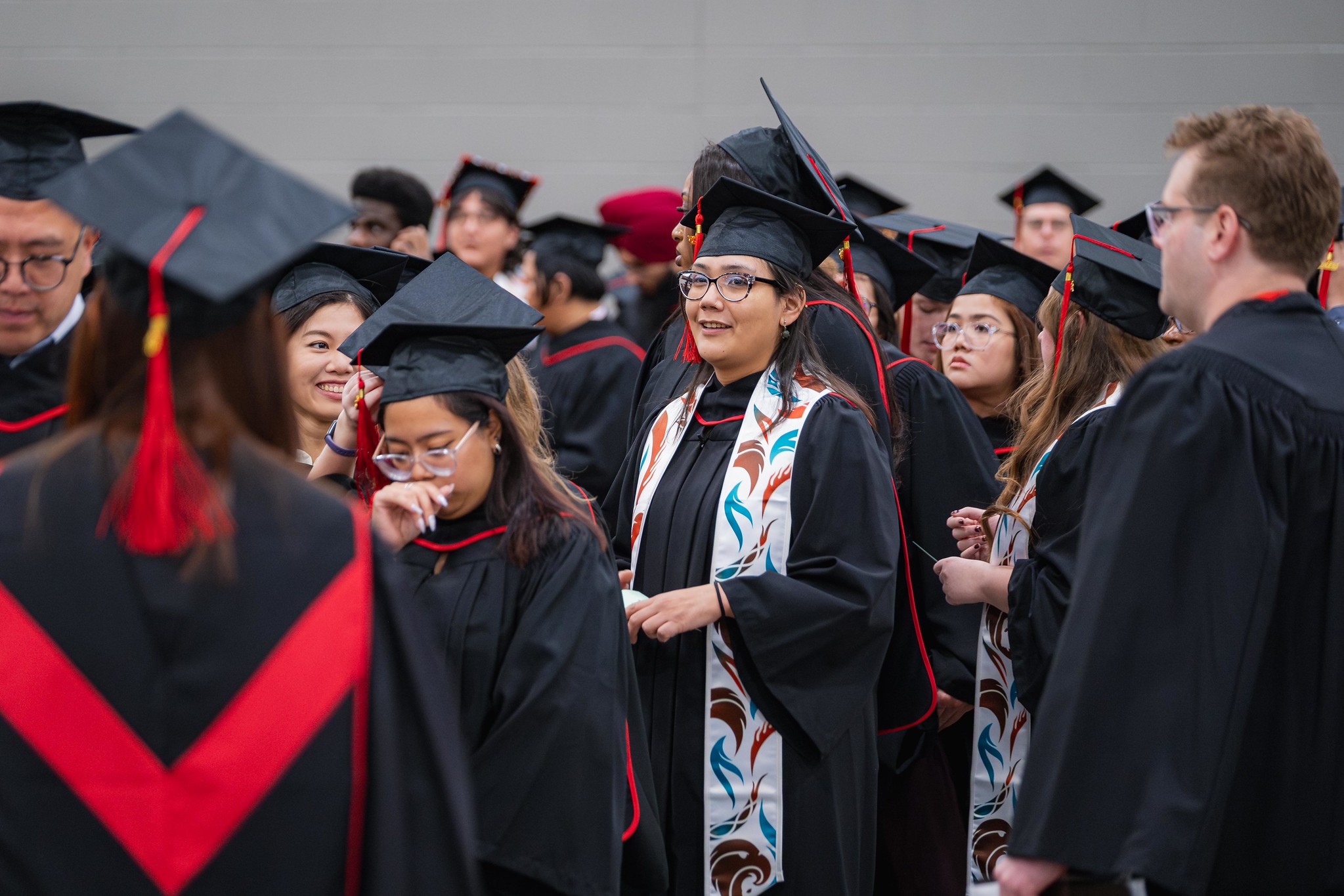
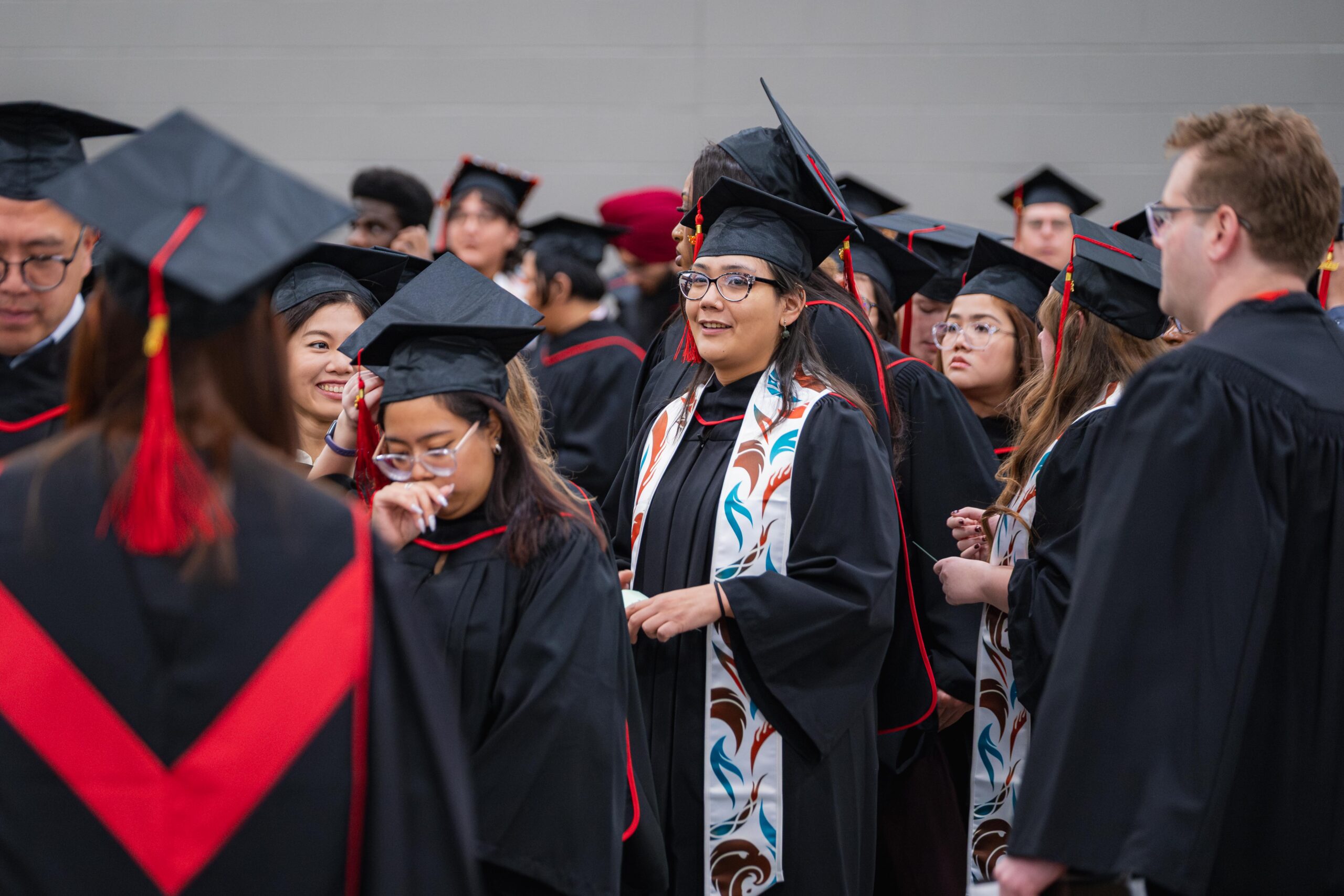
When close to 700 graduates cross the stage at RRC Polytech’s Fall Convocation ceremonies today, many of them will be wearing newly designed stoles that meaningfully reflect the voices, teachings and stories of Indigenous Peoples.

The Polytech is officially unveiling its new Indigenous visual identity — a project grounded in the institution’s commitment to Truth and Reconciliation, Indigenous student success, and shared values of respect, inclusion and belonging.

“Celebrating our latest cohort of graduates is always an exciting, profound occasion,” says Fred Meier, President and CEO, RRC Polytech. “Today’s ceremonies will carry extra significance, as Indigenous graduates cross the stage wearing new stoles that honour tradition while embracing progress and change.”

The stoles and new visual identity are the result of extensive conversations with Indigenous and non-Indigenous students, staff, Knowledge Keepers, Elders and community partners, led by a steering committee made up of RRC Polytech staff and valued partners.

“The design on these stoles is rooted in sacredness, seasonality and interconnectedness, honouring the distinct identities of First Nations, Métis and Inuit Peoples while weaving together themes of land, language and story into a living expression of who we are,” says steering committee member Carla Kematch, Director, Truth and Reconciliation and Community Engagement.

“The visual identity reflects teachings learned through engagement sessions and a survey that was shared among our community, ensuring the design is a true reflection of an identity that belongs to all of us.” Read More →

Inaugural cohort of Indigenous entrepreneurs driving innovation at new business incubator

October 15, 2025

Mittohnee Pogo’ohtah’s mission to bring more local Indigenous business ideas to life has begun with the launch of its inaugural four-month entrepreneurship program and celebration of its first ever cohort of determined entrepreneurs.

Mittohnee is RRC Polytech’s business accelerator and incubator initiative, created by and for Indigenous entrepreneurs to help aspiring and established business leaders build the necessary networks and access the support and training required for increasing the success of any new or existing venture.

“By creating access, breaking down barriers and ensuring Indigenous entrepreneurs have the tools to succeed here in Manitoba, Mittohnee Pogo’ohtah is opening new economic doors,” says Jamie Wilson, Vice-President, Indigenous Strategy, Research and Business Development at RRC Polytech.

“Whether it’s progressing a student’s idea from concept to reality or supporting an established Indigenous entrepreneur and/or band-operated business to pivot, scale up or explore new partnerships, Mittohnee will transform experiential learning, innovation and entrepreneurship into real business opportunities for Indigenous communities.”

The name Mittohnee Pogo’ohtah comes from a Neynowaywin (Cree) expression that means ‘If you are going to do it, do it right. If you don’t know how to do it right, learn how.’

Made possible by the power of partnership — between RRC Polytech, federal and provincial governments, generous corporate partners, TD Bank Group and Canada Life — Mittohnee is a true collaboration and the first of its kind in Manitoba. As one of three Indigenous incubators in the Labs4 national network, it offers additional connections to the innovation ecosystem across the country.

Mittohnee’s inaugural four-month entrepreneurship program will feature mentorship through an entrepreneur-in-residence, training workshops, networking events, opportunities to connect with other business leaders and even student competitions. Read More →

RRC Polytech hosts seventh annual Truth and Reconciliation Week

September 23, 2025

RRC Polytech is hosting its seventh annual Truth and Reconciliation and Community Engagement (TRCE) Week to mark the National Day of Truth and Reconciliation, also known as Orange Shirt Day, on September 30.

This year, TRCE Week began on Monday, Sept. 22, with a virtual keynote from Phyllis Webstad, whose story of Residential Schools started the Orange Shirt movement in 2013.

Portrait of RRC Polytech Nursing student Dasia Chatkana, wearing the t-shirt she designed for Orange Shirt Day.RRC Polytech has also partnered with Nursing student Dasia Chatkana, whose original design is featured on the RRC Polytech Orange Shirt in support of the Mínwastánikéwin Truth and Reconciliation Award, which is awarded to Indigenous students every year in January.

“Every year for seven years, the RRC Polytech community has come together to learn about Truth and Reconciliation and Canada’s true history from Indigenous perspectives,” says Jamie Wilson, RRC Polytech’s Vice-President, Indigenous Strategy, Business Development and Research.

“It’s important for us as an educational institution to not only affirm these histories centring Indigenous Peoples, but also to raise awareness to non-Indigenous Canadians that what they were taught in school doesn’t necessarily reflect all realities.”

TRCE Week is five days filled with sessions to educate the RRC Polytech community about the many different responsibilities of Truth and Reconciliation.

While Truth and Reconciliation is a year-round commitment for RRC Polytech, the National Day for Truth and Reconciliation is a focal point that encourages employees and students to immerse themselves in Indigenous Teachings, storytelling and experiences.

Opportunities to cultivate understandings of the true history and current issues impacting Indigenous Peoples, and reconciliation efforts by society as a whole, contribute to a stronger, more unified community that benefits all members. Read More →

Prairie Research Kitchen joins partnership addressing food security in Indigenous communities

May 22, 2025

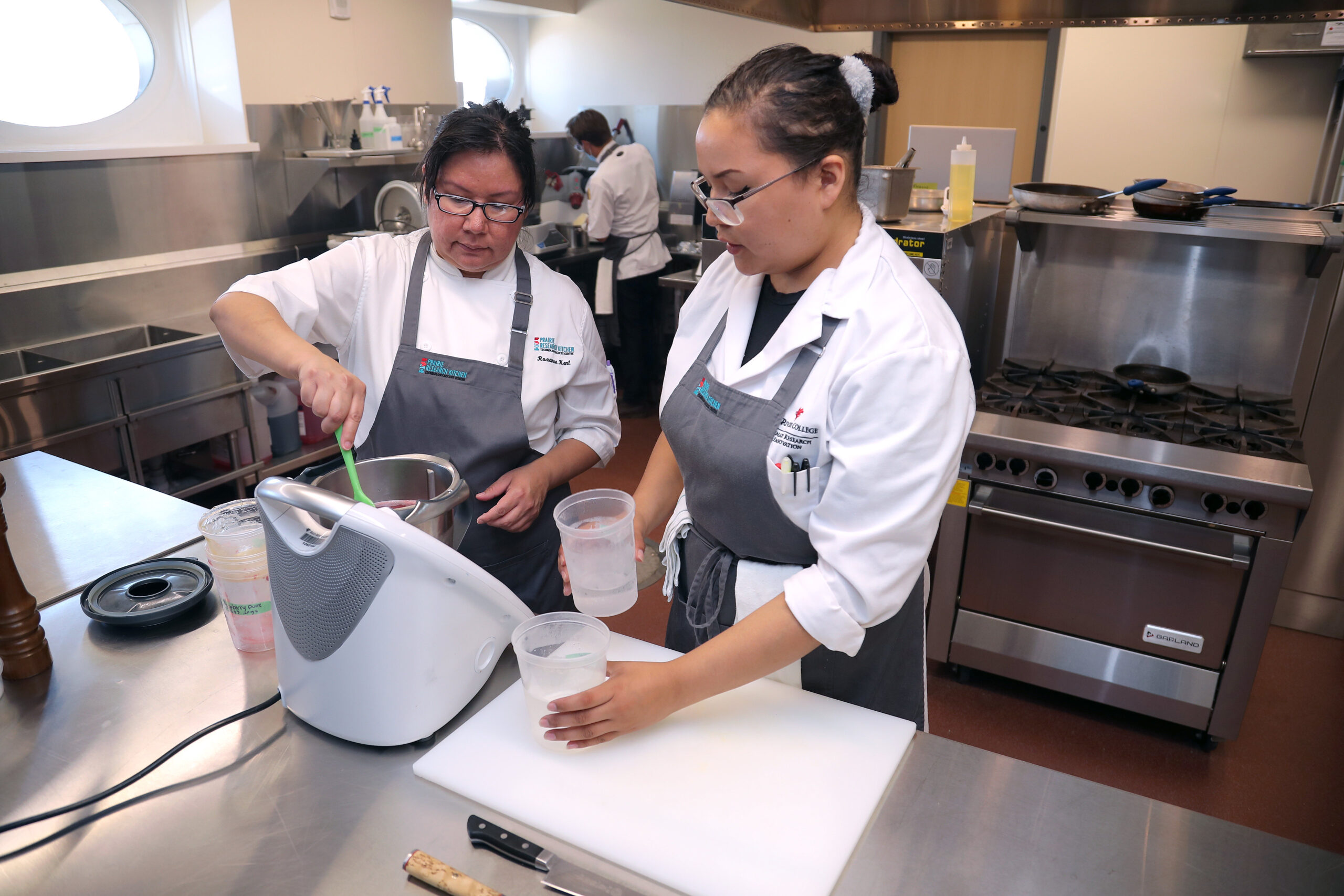
RRC Polytech’s Prairie Research Kitchen (PRK) has joined an applied research consortium — made possible by a $1.2-million investment from Protein Industries Canada (PIC) — aimed at exploring agri-food opportunities and addressing barriers to food security in rural and remote communities in Manitoba.

The $1.6-million project finds staff and students from PRK and the University of Manitoba’s (UM) College of Rehabilitation Sciences at the Rady Faculty of Health Sciences working together with communities across the province to address food insecurity and Indigenous food sovereignty barriers related to First Nations and Red River Métis food production and distribution systems.

“I am pleased to be announcing a new partnership as part of a consortium, together with RRC Polytech and the University of Manitoba, and enabled by the commitment and funding provided through Protein Industries Canada,” said David Beaudin, Minister of Agriculture and Associate Minister of Provincial Education for the Manitoba Métis Federation (MMF), in a news release.

“This project will help facilitate the reimagining of Red River Métis food systems and will unlock new opportunities to better connect with our foods across the National Homeland of the Red River Métis. I look forward to seeing the project build value through capacity and skills development, all while enabling greater local access to nutritious food options.”

Food security exists when all people — at all times — have access to sufficient, safe and nutritious food. It’s not just about having enough food — it also means having the ability to access it and use it in a way that supports a healthy, active life.

Fresh, nutrient-dense groceries often come with a hefty price tag in rural and remote Indigenous communities. The new consortium will work with Red River Métis and First Nations communities in Manitoba to increase access to affordable, nutritious, supply-stable and culturally appropriate food while creating community-specific recipes that incorporate pulses and other plant-based ingredients.

The creation of these options aims to nourish and nurture long-term health outcomes, while increasing opportunities for student learning and jobs and contributing toward future Indigenous economic development. Read More →

College to update Indigenous visual identity

January 28, 2025

RRC Polytech is honoured and excited to embark on a meaningful journey to update its Indigenous visual identity.

This project reflects our deep commitment to Truth and Reconciliation, Indigenous student success and our Strategic Plan priorities.

A key component to the RRC Polytech brand, the updated Indigenous visual identity will serve as a guiding resource for how our College visually represents Indigenous cultures (Inuit, Métis, Status and Non-Status First Nations), stories and relationships across formal communications such as marketing materials, business cards, advertising, signage and presentations.

It will complement our corporate visual identity while highlighting and celebrating Indigenous knowledge, innovation and leadership at RRC Polytech.

To lead this work, we have partnered with Narratives Inc., a creative agency specializing in culturally grounded consultation and design, who is supporting us with an Indigenous-led team

Narratives is working with a Steering Committee, representing areas from across the College, and alongside the Knowledge Keepers Council, to ensure this work is led with care, integrity and Indigenous ways of knowing. Together, we will undertake a collaborative process with input from students, staff, and community partners.

Why This Matters

Indigenous peoples represent the fastest-growing population in Manitoba, yet many continue to face significant barriers to accessing and succeeding in post-secondary education due to enduring and existing impacts of colonial systems. To support reconciliation and create meaningful opportunities, it is essential that our College environment not only welcomes Indigenous students but actively reflects and affirms our identities, histories and cultures.

While fostering a visible identity for Indigenous students and partners is an important step, it is only one of many actions needed to address systemic inequities meaningfully. By creating and sustaining a space that prioritizes safety, respect and cultural relevance, we can begin to build necessary trust, foster meaningful connections with partners, and support Indigenous students in their educational journeys.

How You Can Participate

Your voice is essential to this process. We encourage you to reflect on how this project can contribute to our shared journey toward Truth and Reconciliation and inspire meaningful connections for generations to come. Join one of the many in-person engagement sessions hosted by Narratives on RRC Polytech campuses, and share your perspectives, stories and reflections through the online survey.

This is an opportunity to help shape an identity that will resonate deeply with Indigenous and non-Indigenous audiences alike and represent the values that are important to our community.

Your voice is essential

Whether Indigenous or non-Indigenous – your feedback is essential. Share your perspectives, stories and reflections.

Take the Survey Now

RRC Polytech celebrates 20 years as industry’s gateway to applied research

November 26, 2024

RRC Polytech welcomed Manitobans to the Notre Dame Campus today, as part of the 20th anniversary celebration of its Research Partnerships & Innovation (RPI) enterprise.

A gateway to applied research since its establishment in 2004, RPI connects industry and community partners with RRC Polytech’s comprehensive array of facilities, technology and expertise in collaborative projects that bring innovative ideas to life.

As part of the event, guests toured RRC Polytech’s research labs and areas, saw demonstrations of its leading-edge technology and engaged with faculty, professional research staff and students to learn how applied research projects connect all areas of the College and are driving our province into the future.

“As Manitoba’s polytechnic, RRC Polytech is committed to creating change through innovation and using the knowledge and tools that we offer to benefit our communities and the industries that our graduates will soon be leading,” says Fred Meier, RRC Polytech’s President and CEO.

“Applied research projects drive progress while providing students with invaluable experience through work-integrated learning. We’re eager to build on the incredible success stories we’ve shared with our partners over the last 20 years and to explore new opportunities to find solutions for real-world challenges.”

With 135 researchers and more than 600 students directly involved annually, along with applied research training enabled by research infrastructure in more than 60 courses, RRC Polytech is consistently named a top research college in Canada.

The College’s three NSERC-funded Technology Access Centres (TACs) and other various research facilities and resources are focal points for advancing knowledge, fostering collaboration and accelerating commercialization — with thousands of square feet of space to develop, test and create solutions to support small, medium and large enterprises and communities. Read More →

First cohort of Hollow Water First Nation grads complete Educational Assistant program

June 3, 2024

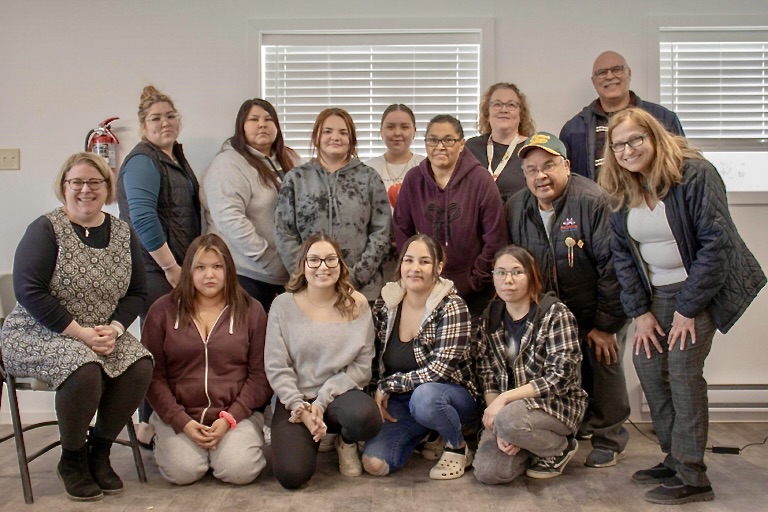
Last month, the first cohort of students in Hollow Water (Waanibiigaaw) First Nation’s Educational Assistant program gathered alongside their instructor and family members to celebrate their graduation with a ceremony and feast.

The community-centred celebration allowed the grads to share their accomplishments with loved ones and community members. They were gifted materials from their community to create their own ribbon skirts to wear to the ceremony.

Instructor Patricia Stouffer says it was important to the grads to take part in a ceremony, not just for themselves but so young people could see the accomplishments possible for them in their community.

Hollow Water First Nation is a tightknit, welcoming community located on the eastern shore of Lake Winnipeg, over 200 kilometres northeast of Winnipeg. Stouffer says her students’ ability to remain close to home while studying was crucial to their success in the program.

“One of the biggest things is having support from home and not experiencing culture shock,” she explains. “It’s hard enough to transition into education, and having this opportunity right in the community opened doors for the students who were a part of this program.

“Being in their community allowed them to keep their values and connection to family alive and well throughout their education and get the support that only being close to home can provide.”

Chloe Seymour is one of the eight graduating students and is already working right in her community at Wanipigow School. She says it felt nice to be recognized at the ceremony and for her community members to see how hard she’d worked — echoing Stouffer’s sentiment that close proximity to educational opportunities is crucial.

Seymour held two part-time jobs while in the program — jobs she would’ve had to give up if she’d been required to travel to another part of the province to complete the program. It was also important to her that she could set an example for kids in Hollow Water.

“I’m glad I got to show the youth in my community that they don’t have to leave their home to continue their education, and that they can be successful, just like I was,” she says.

Read More →

College signs SDG Accord; continues to lead in sustainable development

December 8, 2023

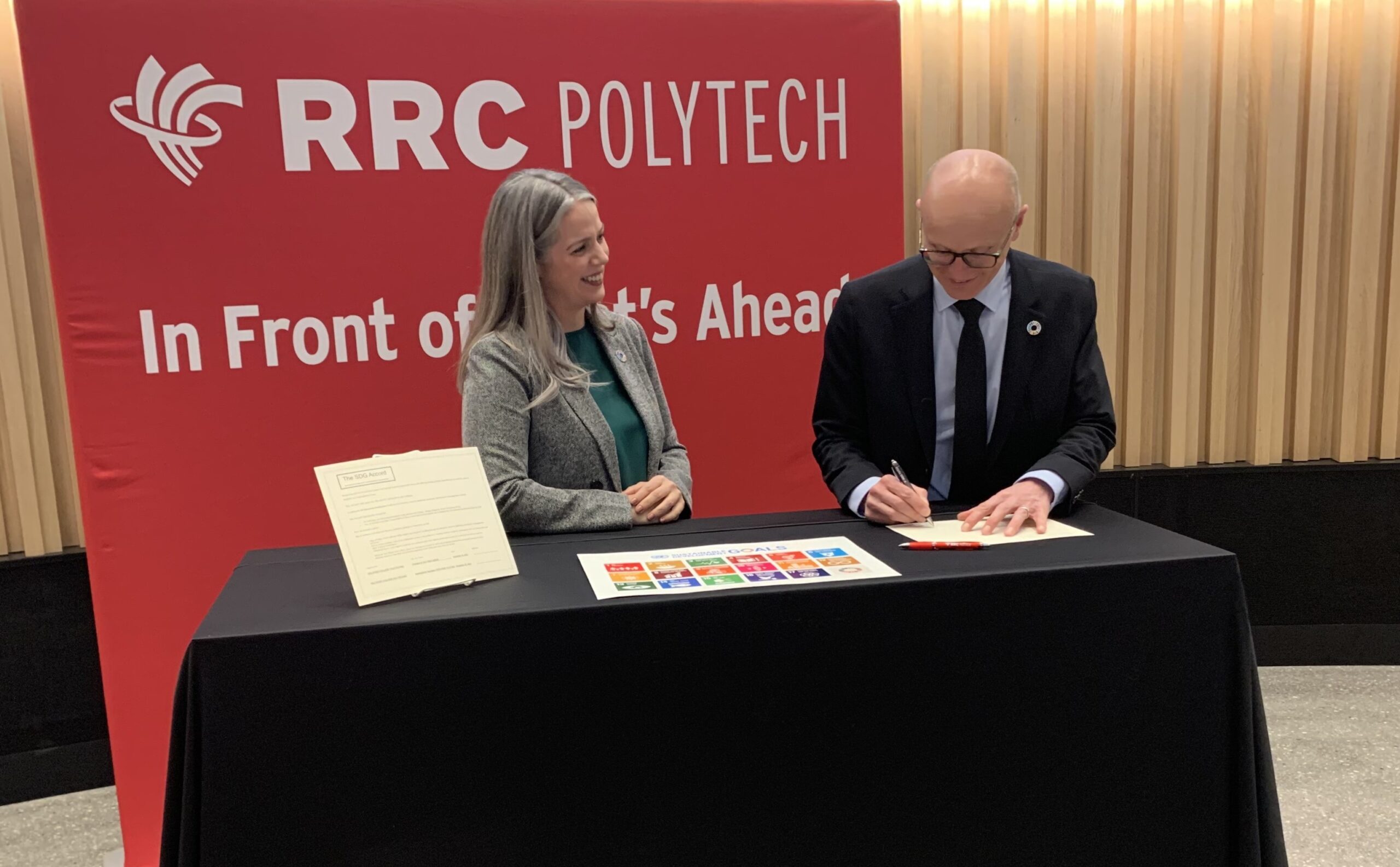
RRC Polytech has become the first post-secondary in Manitoba to the sign the SDG Accord, committing to embed the United Nations’ Sustainable Development Goals (SDGs) into its education, research, leadership, operations, administration and engagement activities.

The 17 SDGs represent an ambitious call to action to end poverty, protect the planet and ensure that all people enjoy peace and prosperity. They align with the values in RRC Polytech’s strategic plan and directly support the College’s commitments.

“Our primary objective is training the workforce of today and tomorrow, so we are uniquely positioned to lead transformative change and build a more sustainable future — and the SDGs are a valuable tool to help us focus our efforts,” says RRC Polytech President Fred Meier.

“Sustainability is a journey without a final destination, so we’re prepared and excited to build on the current initiatives led by our Environmental Stewardship and Campus Renewal team and broaden our approach to include research, academics and all areas of College operations.”

The SDGs are a global blueprint for all people around the world to improve health and education, reduce inequality, spur economic growth and tackle climate change. They aim to achieve peace and prosperity for people and the planet, now and into the future. While each goal has its own separate objective, they are indivisibly linked and interdependent.

“We can’t have good health and well-being without clean water, and we can’t have sustainable, inclusive communities without reducing inequality,” says Sustainability Specialist Stephanie Fulford. “So while the goals are ambitious, they reflect the scope of our global challenges, give us real targets to strive toward and a pathway to achieve them.”

“We also recognize that to achieve these goals will require all of us, in every sector of society, to work together — which is why formally signing the accord is so important.” Read More →

RRC Polytech campuses are located on the lands of the Anishinaabeg, Ininiwak, Anishininwak, Dakota Oyate, and Denésuline, and the National Homeland of the Red River Métis.

We recognize and honour Treaty 3 Territory Shoal Lake 40 First Nation, the source of Winnipeg’s clean drinking water. In addition, we acknowledge Treaty Territories which provide us with access to electricity we use in both our personal and professional lives.