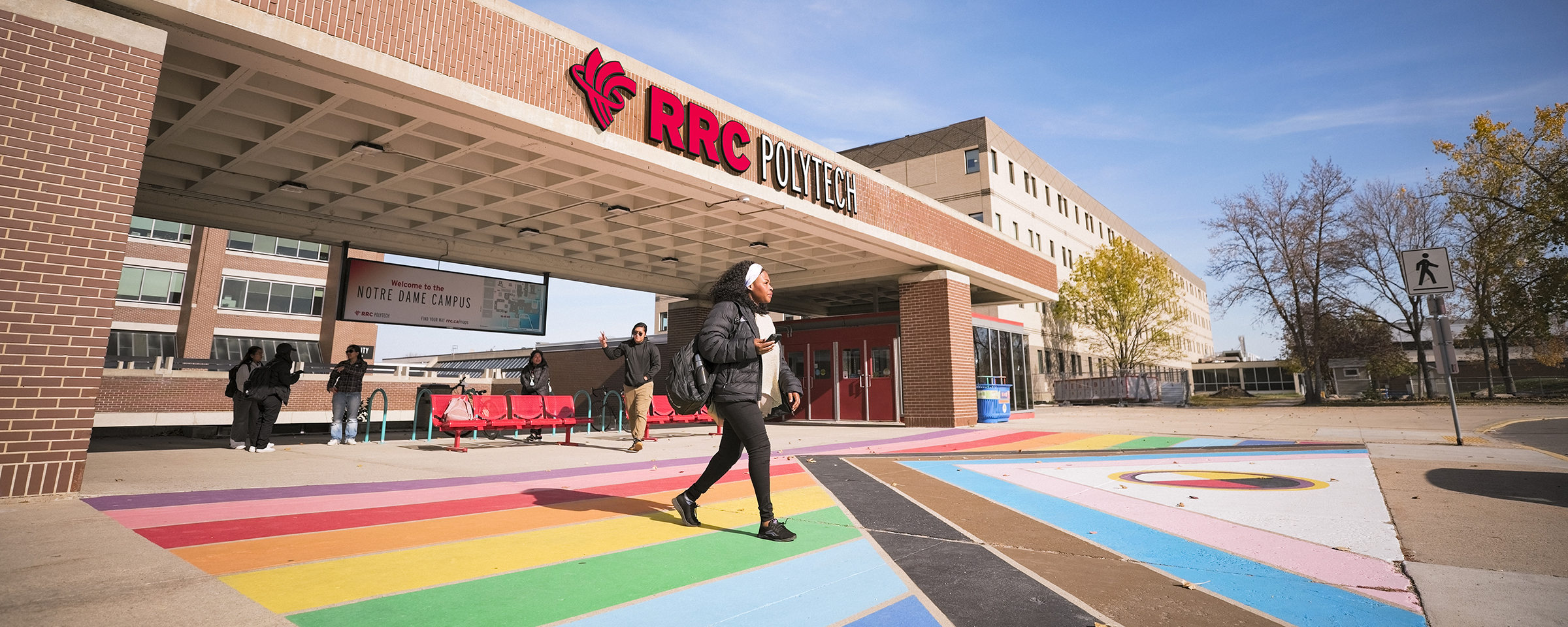
Woman walking in front of RRC Polytech's Notre Dame Campus

News

Sustainability

Sustainability efforts achieve new gold standard
November 18, 2025

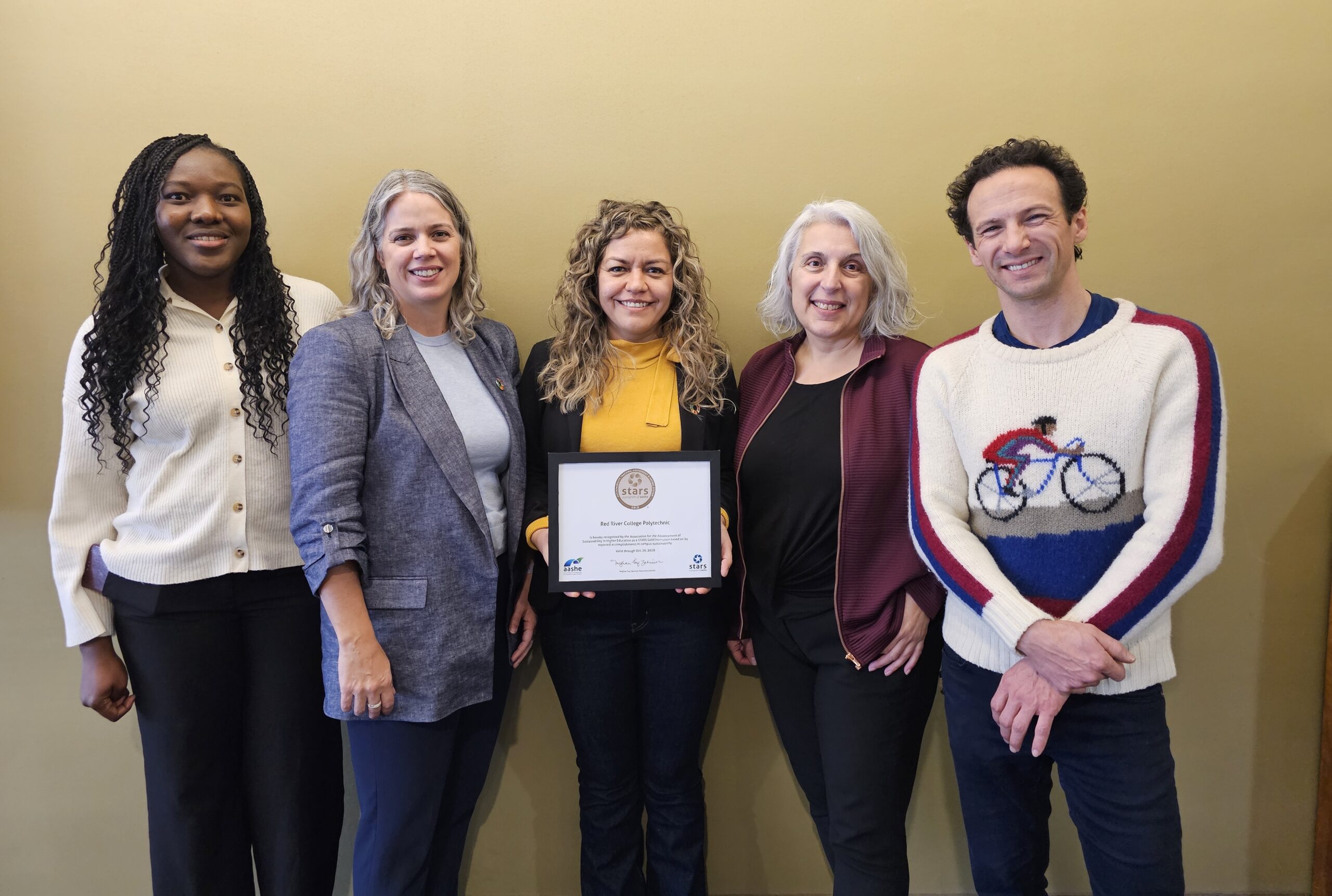
For the first time ever, RRC Polytech has earned a Gold rating in the Sustainability Tracking, Assessment & Rating System known as STARS. Developed by the Association for the Advancement of Sustainability in Higher Education, STARS is the most widely recognized framework for measuring sustainability performance in post-secondary institutions, with over 1,200 participants across 52 countries.

An improvement of more than 20 points from its previous submission, RRC Polytech’s Gold status acknowledges its deep commitment to sustainability across academics, operations, engagement, planning and innovation. It’s a testament to the Polytech’s collaborative, campus-wide efforts to embed sustainability into every facet of its mission.

“This achievement represents much more than just a framed certificate to be proud of — it’s a reflection of the collective effort across our campuses to build a better tomorrow and the real, positive impact we’re making in our community,” says Giselle Martel, Vice-President, Finance and Administration.

“From tangible results, like our ongoing efforts to reduce water and energy use in our buildings to applied research partnerships in clean energy technologies to the long-term investment to embed equity, diversity, inclusion and accessibility into our daily actions, the sustainability principles we champion today will shape the innovators and decision-makers of tomorrow.”

Awarded every three years, the STARS ratings motivate organizations to assess how they approach the environmental, social and economic dimensions of sustainability and develop methods and programs to address the global challenges that we’re all facing. Read More →
RRC Polytech to share in $11.3 million of funding for green training initiative

August 25, 2025

RRC Polytech is bringing down costs for Canadians and helping them get ahead by continuing to grow its critical role in Canada’s low-carbon transition, along with its capacity to train the workforce of today and tomorrow.

An established research leader in clean energy, EV and battery technology and sustainable construction, RRC Polytech is unleashing the power of pan-Canadian collaboration to make housing more affordable, catalyze change in the construction sector and create new jobs in the skilled trades.

With support from a $11.3 million investment from the Government of Canada’s Sectoral Workforce Solutions Program, RRC Polytech is joining its Canadian Colleges for a Resilient Recovery (C2R2) partners in a national green construction training initiative to upskill and reskill Canadians to build and retrofit homes and buildings that reduce energy consumption in pursuit of the ambitious targets of net-zero emissions by 2050 and a net-zero electricity system by 2035.

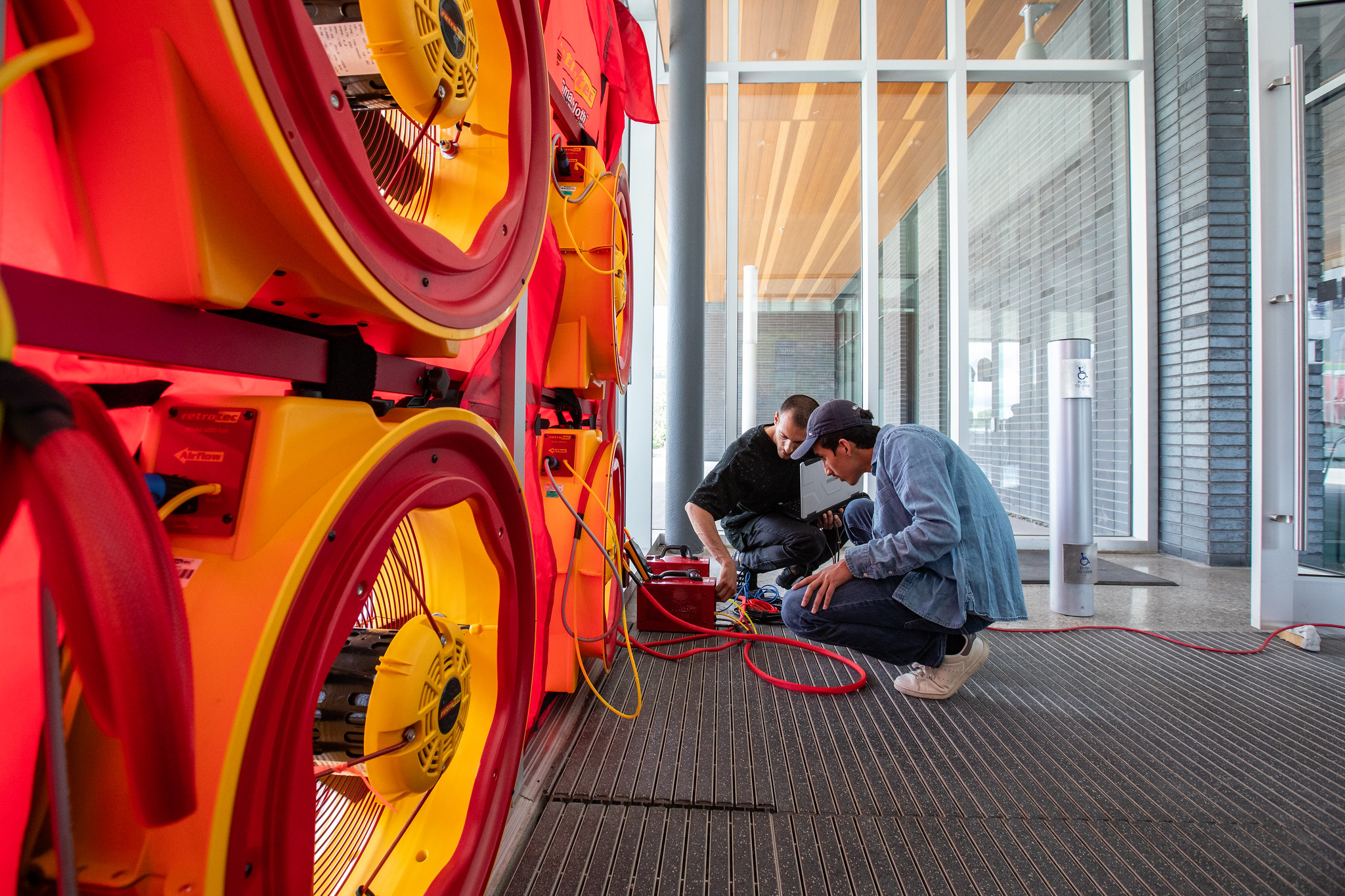
Home to Manitoba’s only Building Efficiency Technology Access Centre, RRC Polytech will use the funds announced last week to drive economic growth while helping Canada meet its climate and housing goals by working with its industry and academic partners to develop and deliver practical, innovative training in sustainable construction.

“This nation-wide training initiative is the latest example of how RRC Polytech’s flexible learning model and vast applied research facilities and expertise — combined with our commitment to foster collaboration with industry, communities and government — uniquely positions us to not only support but to lead the low-carbon transition,” says Fred Meier, RRC Polytech’s President and CEO.

Accessible, industry-aligned training that equips workers with the technical and leadership skills they need to adopt green building practices, create sustainable designs and upgrade existing aging infrastructure will be offered through the Quick Train Canada platform — exclusive to RRC Polytech in Manitoba — with the first intake in Building Science for the Retrofit Sector scheduled for November.

The next phase of available courses will be launched this winter, as funding through the Advancing Access and Skills Training for Green Buildings and Retrofits initiative will be available until March 2028.

“This project-based funding allows us to expand our available suite of clean energy training and share that knowledge with our C2R2 partners while helping to reduce fees for students — making this an affordable choice for local industry leaders to upskill their workforce and for individual learners who want to expand their knowledge to maximize on the opportunities created as the province transitions to a low-carbon economy,” says Jill Latschislaw, Director of Corporate Solutions, Indigenous Strategy, Research and Business Development. Read More →

Prairie Research Kitchen joins partnership addressing food security in Indigenous communities

May 22, 2025

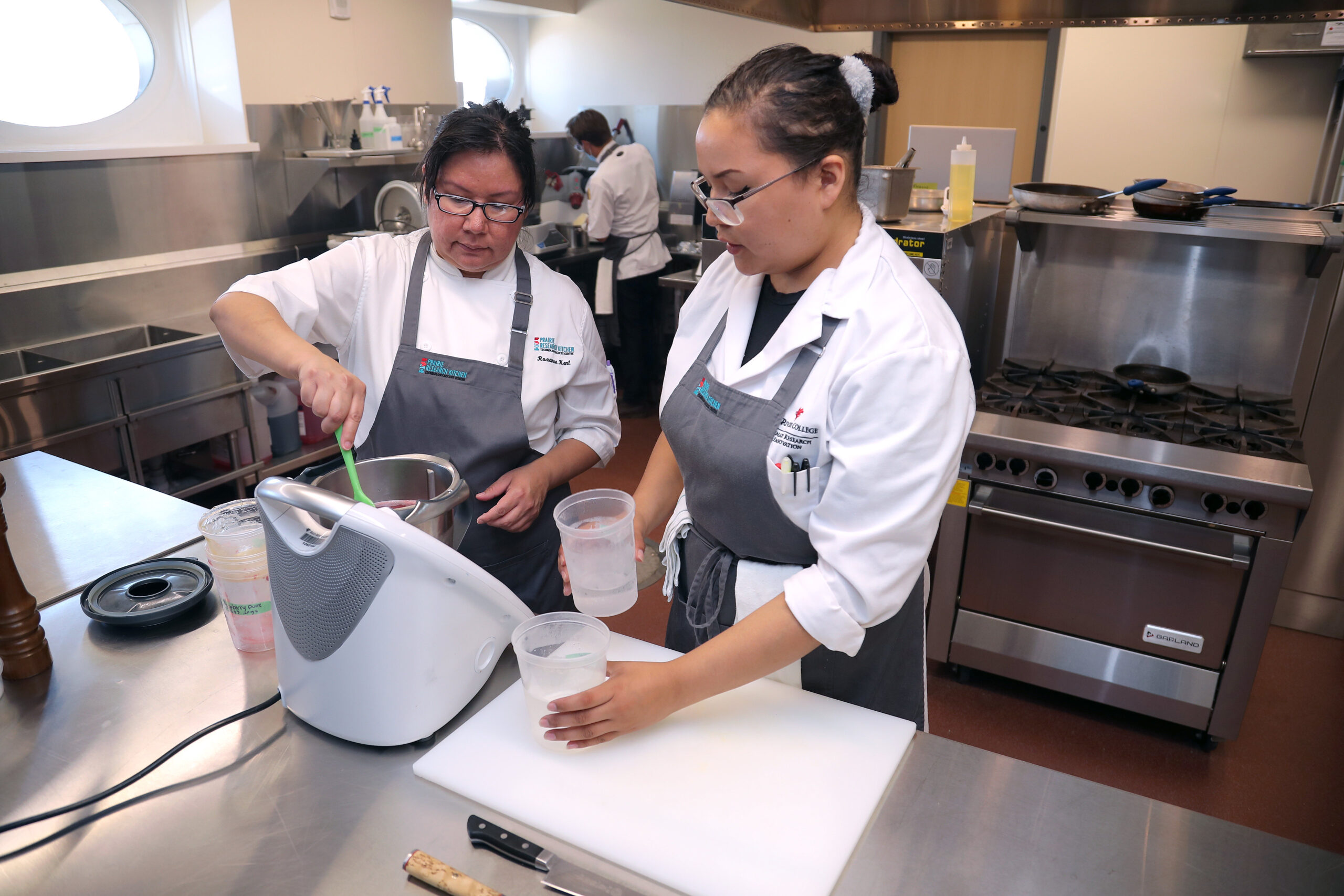
RRC Polytech’s Prairie Research Kitchen (PRK) has joined an applied research consortium — made possible by a $1.2-million investment from Protein Industries Canada (PIC) — aimed at exploring agri-food opportunities and addressing barriers to food security in rural and remote communities in Manitoba.

The $1.6-million project finds staff and students from PRK and the University of Manitoba’s (UM) College of Rehabilitation Sciences at the Rady Faculty of Health Sciences working together with communities across the province to address food insecurity and Indigenous food sovereignty barriers related to First Nations and Red River Métis food production and distribution systems.

“I am pleased to be announcing a new partnership as part of a consortium, together with RRC Polytech and the University of Manitoba, and enabled by the commitment and funding provided through Protein Industries Canada,” said David Beaudin, Minister of Agriculture and Associate Minister of Provincial Education for the Manitoba Métis Federation (MMF), in a news release.

“This project will help facilitate the reimagining of Red River Métis food systems and will unlock new opportunities to better connect with our foods across the National Homeland of the Red River Métis. I look forward to seeing the project build value through capacity and skills development, all while enabling greater local access to nutritious food options.”

Food security exists when all people — at all times — have access to sufficient, safe and nutritious food. It’s not just about having enough food — it also means having the ability to access it and use it in a way that supports a healthy, active life.

Fresh, nutrient-dense groceries often come with a hefty price tag in rural and remote Indigenous communities. The new consortium will work with Red River Métis and First Nations communities in Manitoba to increase access to affordable, nutritious, supply-stable and culturally appropriate food while creating community-specific recipes that incorporate pulses and other plant-based ingredients.

The creation of these options aims to nourish and nurture long-term health outcomes, while increasing opportunities for student learning and jobs and contributing toward future Indigenous economic development. Read More →

College signs SDG Accord; continues to lead in sustainable development

December 8, 2023

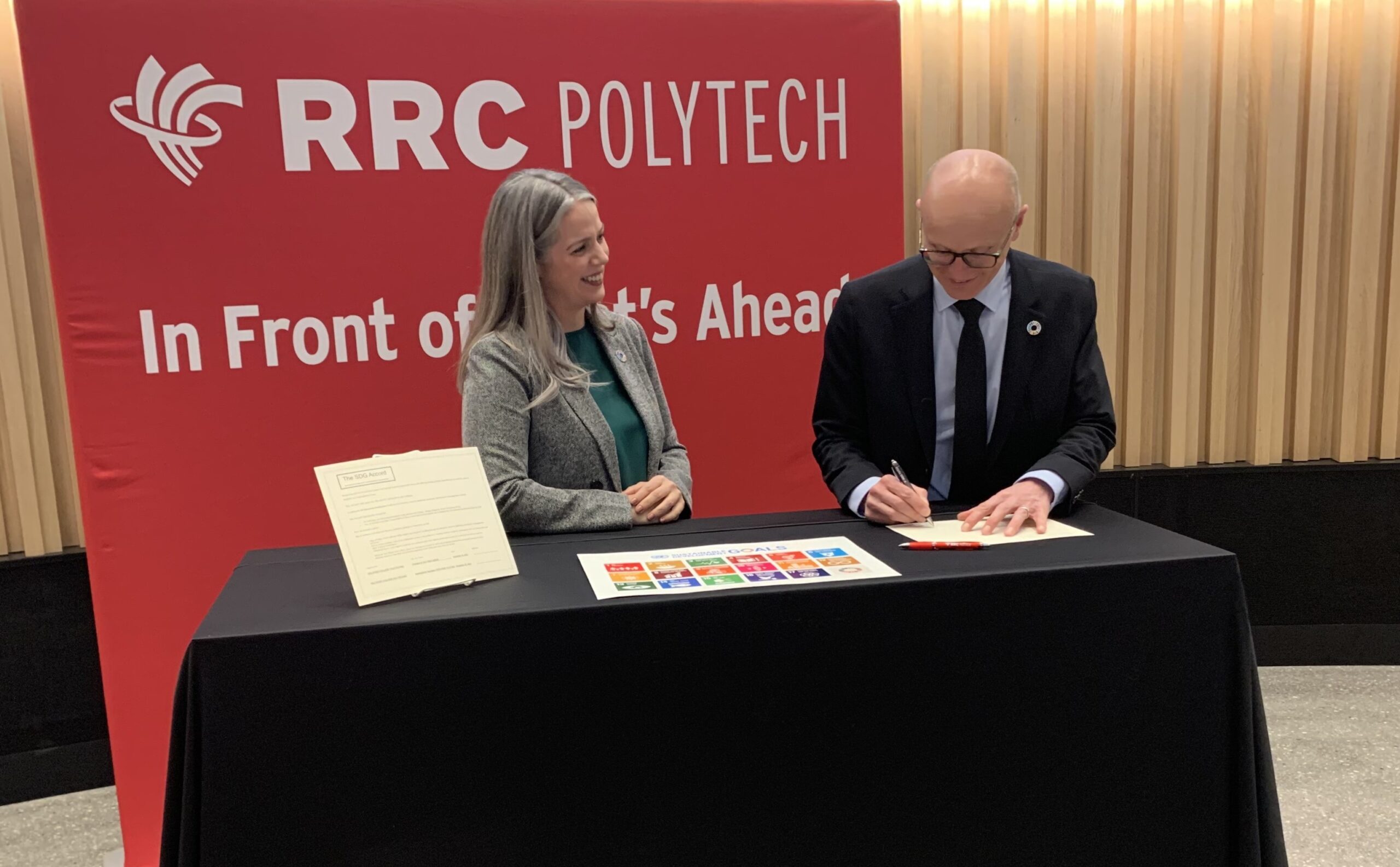
RRC Polytech has become the first post-secondary in Manitoba to the sign the SDG Accord, committing to embed the United Nations’ Sustainable Development Goals (SDGs) into its education, research, leadership, operations, administration and engagement activities.

The 17 SDGs represent an ambitious call to action to end poverty, protect the planet and ensure that all people enjoy peace and prosperity. They align with the values in RRC Polytech’s strategic plan and directly support the College’s commitments.

“Our primary objective is training the workforce of today and tomorrow, so we are uniquely positioned to lead transformative change and build a more sustainable future — and the SDGs are a valuable tool to help us focus our efforts,” says RRC Polytech President Fred Meier.

“Sustainability is a journey without a final destination, so we’re prepared and excited to build on the current initiatives led by our Environmental Stewardship and Campus Renewal team and broaden our approach to include research, academics and all areas of College operations.”

The SDGs are a global blueprint for all people around the world to improve health and education, reduce inequality, spur economic growth and tackle climate change. They aim to achieve peace and prosperity for people and the planet, now and into the future. While each goal has its own separate objective, they are indivisibly linked and interdependent.

“We can’t have good health and well-being without clean water, and we can’t have sustainable, inclusive communities without reducing inequality,” says Sustainability Specialist Stephanie Fulford. “So while the goals are ambitious, they reflect the scope of our global challenges, give us real targets to strive toward and a pathway to achieve them.”

“We also recognize that to achieve these goals will require all of us, in every sector of society, to work together — which is why formally signing the accord is so important.” Read More →

Quick Train courses boost College’s contribution to a cleaner economy

May 9, 2023

RRC Polytech is meeting with federal parliamentarians this week to discuss further opportunities for Canada’s colleges, Cégeps and institutions to be the driving force in providing the skills required to transition to a clean economy.

The virtual meetings, led by Canadian Colleges for a Resilient Recovery (C2R2) — a coalition of 14 institutions from across Canada that work together to provide the skills required to transition to a clean economy — build off the success of the recently launched Quick Train Canada initiative.

Quick Train Canada is a series of tuition-free micro-credential courses offered at C2R2 institutes across the country that focus on providing Canadian workers and employers with options to update skills quickly through multi-week, virtual and in-person learning designed to boost job security and participation as the economy transitions to more sustainable practices.

“RRC Polytech’s six Quick Train courses filled up within the first week of being launched, which shows there’s a demonstrated need for learners to quickly and easily bolster their portfolios with relevant skills that will contribute to a greener economy,” says Fred Meier, the College’s President and CEO.

“RRC Polytech and C2R2 members across Canada are positioned to quickly develop thousands of training and applied research opportunities to help Canadians access new careers, support the transition to a low-carbon economy and foster equity, diversity and inclusion.”

Each C2R2 institution offers Quick Train courses relevant to their areas of expertise. All courses are tuition-free, and many are offered virtually so anyone in Canada can access them. Read More →

Mockups and lockups: Manufacturing student creates new covers for on-campus bike lockers

May 4, 2022

You can’t make something from nothing. Unless you’re in manufacturing — then you can come pretty close.

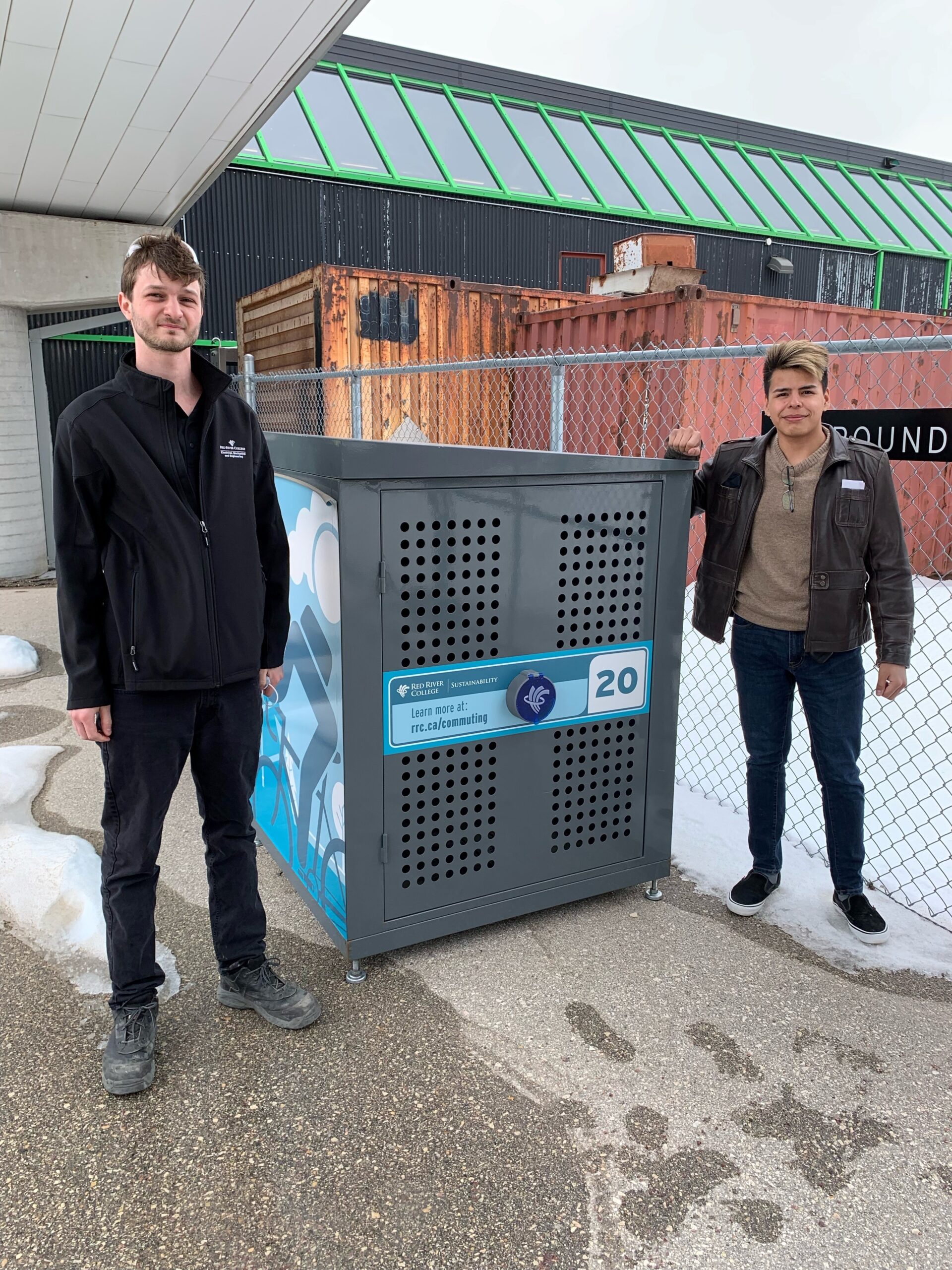
Just ask Ryan Ross, a CNC Machining and Advanced Technology student who created durable weatherproof covers for RRC Polytech’s bike lockers.

“In the beginning I had nothing to work with,” says Ross (shown, at right). “It all started with hours of CAD (computer aided design) to get an initial shape and feel for the part. Once I measured (the lockers), I realized my design fit quite comfortably and my second iteration was adapted to use the measurements.”

After he 3D-printed his designs and confirmed they were functional, it was time to research the right material for the job. Another challenge: using something he had not worked with before.

“For the past two years I’ve learned to be a machinist — to work with metals. To be in a project with virtually no machining and work with a different material entirely … it was definitely a bit of a culture shock,” says Ross. “It taught me a lot about the plastics manufacturing industry — it really shows you that even the simplest plastic piece has a lot of meticulous steps to perfecting the process.”

Ross chose to make the parts out of two pieces of polyurethane resin, as it’s tough, resistant to moisture and chemicals, and can be mixed with UV-resistant additives to boost life expectancy against the sun.

“I wanted to make something that was elegant and simple, but portrayed the College’s pride and grace through a single act of production,” says Ross. “It was hard to conceptualize in the beginning, but I got input from many instructors and fellow classmates and was able to finalize the design.” Read More →

RRC Polytech honoured for heritage preservation of historic Scott Fruit Building

March 29, 2022

RRC Polytech proudly accepted a Heritage Conservation Award for its recently opened Manitou a bi Bii daziigae space at Heritage Winnipeg’s 36th annual Preservation Awards last Thursday. The award was received in partnership with Number TEN Architectural Group and recognizes the project team’s special effort to protect, conserve and reuse the historically designated Scott Fruit Building in its transformation of the Exchange District Campus.

“This award celebrates the spirit of innovation that bonds education and industry, leading to progress in any era,” says Lynn Zapshala-Kelln, Vice-President Finance and Administration at the College. “RRC Polytech is proud to extend the legacy of such an historic site, knowing its modernization will keep its entrepreneurial spirit alive while allowing us to achieve our commitments to constantly transform our learning model, strengthen academic pathways for students and deepen community partnerships.”

Located on Elgin Avenue, the 100,000-sq. ft. Manitou a bi Bii daziigae (shown above, under construction) was designed to look to the future while respecting the past. Adapting and upgrading the nearly 110-year-old Scott Fruit Building included restoration of the original wood and steel windows, the cleaning and repointing of the brick façade and incorporating historic elements in the interior design of the new space.

“The Scott Fruit Building’s longevity is a testament to the value of innovation,” says Zapshala-Kelln. “By protecting and celebrating its heritage status, Manitou a bi Bii daziigae provides our students and staff with a tangible link to our community’s rich history of visionary thinkers, who serve as their role models as they shape the next century of advancement.”

Built using the latest construction technology of concrete and steel in 1914, the Scott Fruit Warehouse was considered cutting-edge in architecture and appliance capability at the time, helping Winnipeg become the wholesale centre of Western Canada. Read More →

RRC Polytech staff, student, and alumni artisans offer local holiday goods

December 1, 2021

In past years, Red River College Polytechnic’s Sustainability team and Alumni Engagement have hosted a daylong Winter Market featuring products made by staff, student, and alumni artisans to celebrate the holiday season and encourage buying local.

Since campuses are not yet fully open to the public, RRC Polytech has once again created an online directory of makers in place of an in-person market experience. 

“The College’s alumni community is a diverse network of creators, entrepreneurs, and innovators. Following a challenging holiday season last year, we want to do our part to elevate these local businesses and encourage our community to shop local,” says Katrina Sklepowich, RRC Polytech’s Alumni Engagement Officer.

“We’ll be highlighting a number of makers each day for “12 Days of Holiday Shopping” – we encourage you to follow the RRC Polytech and Sustainability accounts on Instagram, where we’ll be sharing makers you can support between December 1-16.”

When you buy local from small businesses and artisan makers, you’re not only supporting creative makers in our community, but also the local economy. RRC Polytech has a strong commitment to sustainability and this is one way we’re able to encourage conscious shopping while promoting our talented staff, student, and alumni makers.

Read More →

Going electric in the sub-Arctic: RRC and Frontiers North unveil EV Tundra Buggy

August 24, 2021

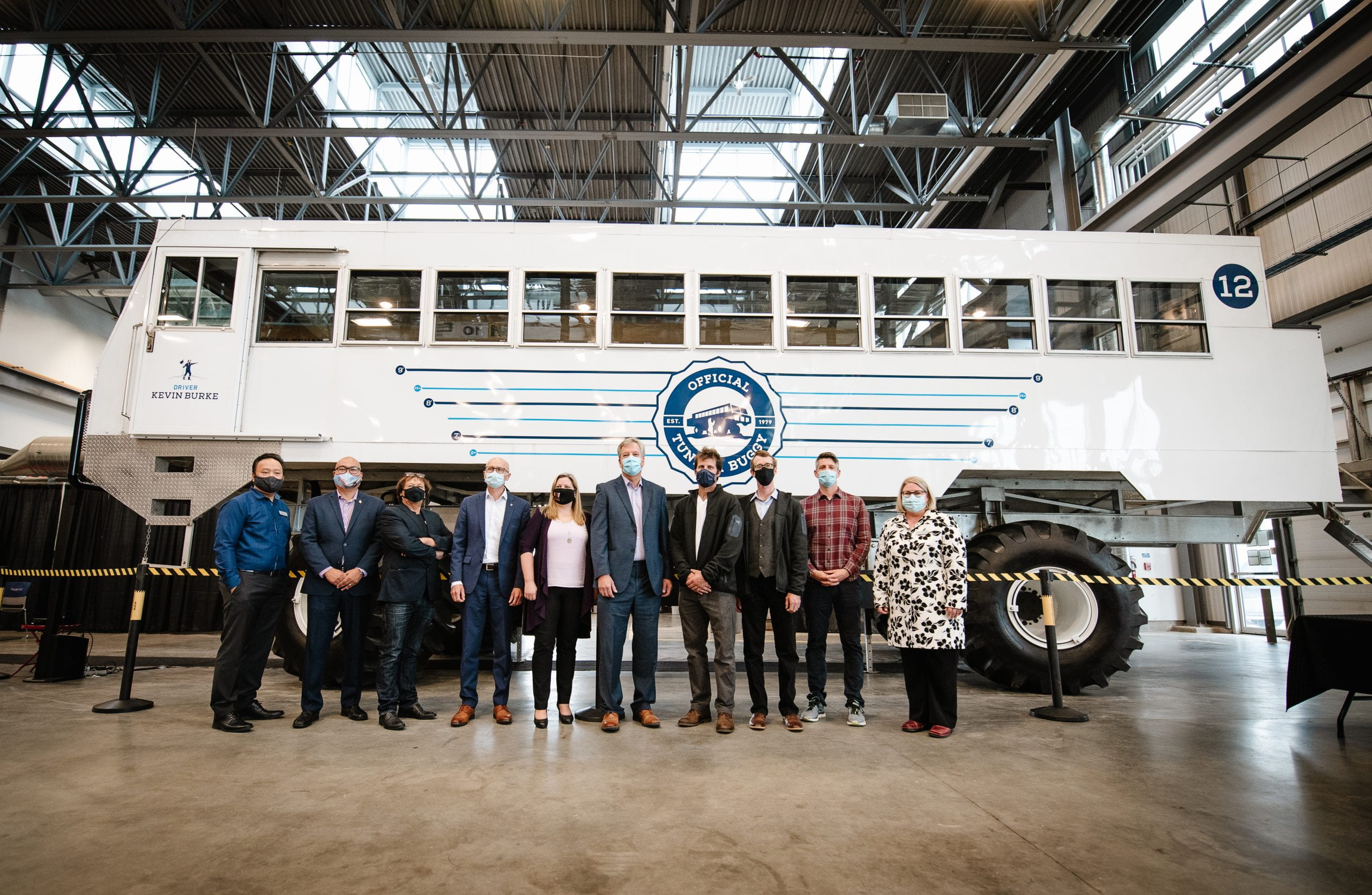
Today, Frontiers North Adventures and Red River College unveiled a new zero-emission vehicle technology initiative. The Electric Vehicle Tundra Buggy® is a collaborative, proof-of-concept project that oversaw the conversion of a Tundra Buggy in Frontiers North’s touring fleet from diesel-powered to battery electric.

The EV Tundra Buggy was made possible through the province’s new Conservation and Climate Fund, and the Vehicle Technology Centre (VTCI) — a non-profit organization dedicated to supporting Manitoba’s heavy vehicle manufacturing sector — and through in-kind support and technical services from RRC’s Vehicle Technology & Energy Centre (VTEC).

“The Manitoba government is committed to supporting environmental projects like the EV Tundra Buggy that beautifully blends our commitment to environmental sustainability, green energy and the entrepreneurial spirit of our province,” says Conservation and Climate Minister Sarah Guillemard.

“We remain committed to making Manitoba the cleanest, greenest, most climate-resilient province in the country, and projects like this can help make that happen.”

The project’s goal of reducing environmental impact and protecting Manitoba’s sub-Arctic landscape will help to create a culture of sustainable tourism in Churchill, one of the province’s top year-round destinations.

“Our company’s purpose is all about stewardship, and positively contributing to our communities and environments,” says John Gunter, President and CEO of Frontiers North.

“By starting the conversion of our fleet with this first EV Tundra Buggy, Frontiers North is taking meaningful steps towards reducing our GHG emissions and creating new clean tech jobs. We are also excited to provide our touring guests a silent EV Tundra Buggy experience amongst wild polar bears and beneath the northern lights. For their support of this project we thank Manitoba, Vehicle Technology Centre Inc. and Red River College.”

The EV Tundra Buggy project builds upon research, testing and demonstration VTEC has undertaken for the shift of transit buses to electric. The battery used in the buggy is repurposed from an e-bus. By tapping into VTEC’s in-house technical expertise and using a repurposed e-bus battery, Frontiers North was able to confirm their vision of shifting from diesel to electric was feasible. Read More →

Going green: College launches Energy Advisor program to support sustainable energy efforts

July 13, 2021

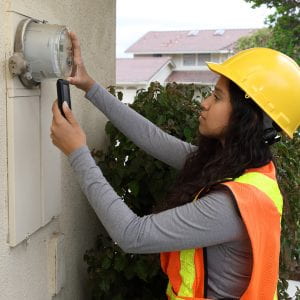
Female energy advisor takes outdoor meter reading.Red River College, in collaboration with the Manitoba Environmental Industries Association (MEIA), is the first post-secondary institution in the province to launch an Energy Advisor program.

The 15-week, part-time micro-credential program was developed to meet the need for Energy Advisors (EAs) to help deliver the one million EnerGuide rating services for eligible homes in Canada, as per the federal government’s Greener Homes initiative.

With the roll-out of the government’s Greener Home initiative and the nation-wide shortage of EAs, there’s an increased demand for specialized training, and in turn an immediate opportunity for employment for skilled labourers in Manitoba.

“The Energy Advisor micro-credential program was created to address and meet industry demands,” says Dr. Christine Watson, RRC’s Vice President, Academic and Research. “By leveraging the in-house expertise at RRC’s dynamic research facilities — including the Building Efficiency Technology Access Centre (BETAC) — along with our partners at MEIA, we’re delivering specialized skills training to prepare Manitobans for immediate employment in the growing sector of sustainable infrastructure.”

The micro-credential courses are targeted for Manitobans currently working in the fields of construction, trades or engineering, to provide necessary up-skilling. The program was designed to help learners acquire the knowledge and specialized skills to get certified as an EA and pass the Natural Resources Canada (NRCan) federal examination.

Once NRCan-certified, EAs can also add other NRCan services to their qualification, including EnerGuide for Multi-Unit Residential Buildings and ENERGY STAR for New Homes. Read More →

RRC Polytech campuses are located on the lands of the Anishinaabeg, Ininiwak, Anishininwak, Dakota Oyate, and Denésuline, and the National Homeland of the Red River Métis.

We recognize and honour Treaty 3 Territory Shoal Lake 40 First Nation, the source of Winnipeg’s clean drinking water. In addition, we acknowledge Treaty Territories which provide us with access to electricity we use in both our personal and professional lives.